
Beer to go
Available cans

Collaboration with Dead Language Beer Project
Achilles is a Breslau-style Dark Schoeps lagered in @lairdsapplejack Apple Brandy barrels brewed in collaboration with our good friends at @deadlanguage.beer! This ale has notes of pie crust, apple crumble, fresh apple cider, and sticky toffee pudding. It is soft, complex, and perfect for a cold winter night! Schoeps was a wheat beer brewed as early as the 14th century in the area of Breslau (modern day Wroclaw, Poland) and it was crafted with a majority of malted wheat, a neutral ale yeast, such as kölsch yeast, and classic noble hops. There were also multiple versions of this style, ranging from dark to light and in abv strength. Our version was crafted with a blend of light and dark wheat malt, torrified wheat, and specialty pale ale malt, whole leaf Amarillo and Cascade hops, and our house kölsch yeast. After fermenting cold and slow in primary for a couple weeks, we lagered this ale in freshly emptied Laird's Apple Brandy barrels for just over eight weeks. After lagering in our cooler we transferred it into our brite tank where it lagered for another three weeks before packaging. The beer that emerged is complex, creamy, and decadent.

This rice lager is crisp, dry, and incredibly refreshing. We taste notes of orange marmalade, rice cracker, and golden honey! We crafted it with American malted barley, sake rice (utilized in a cereal mash), flaked rice, a famous German lager strain hailing from Berlin, and 100% Chaos hops from @fourstarfarms in MA.
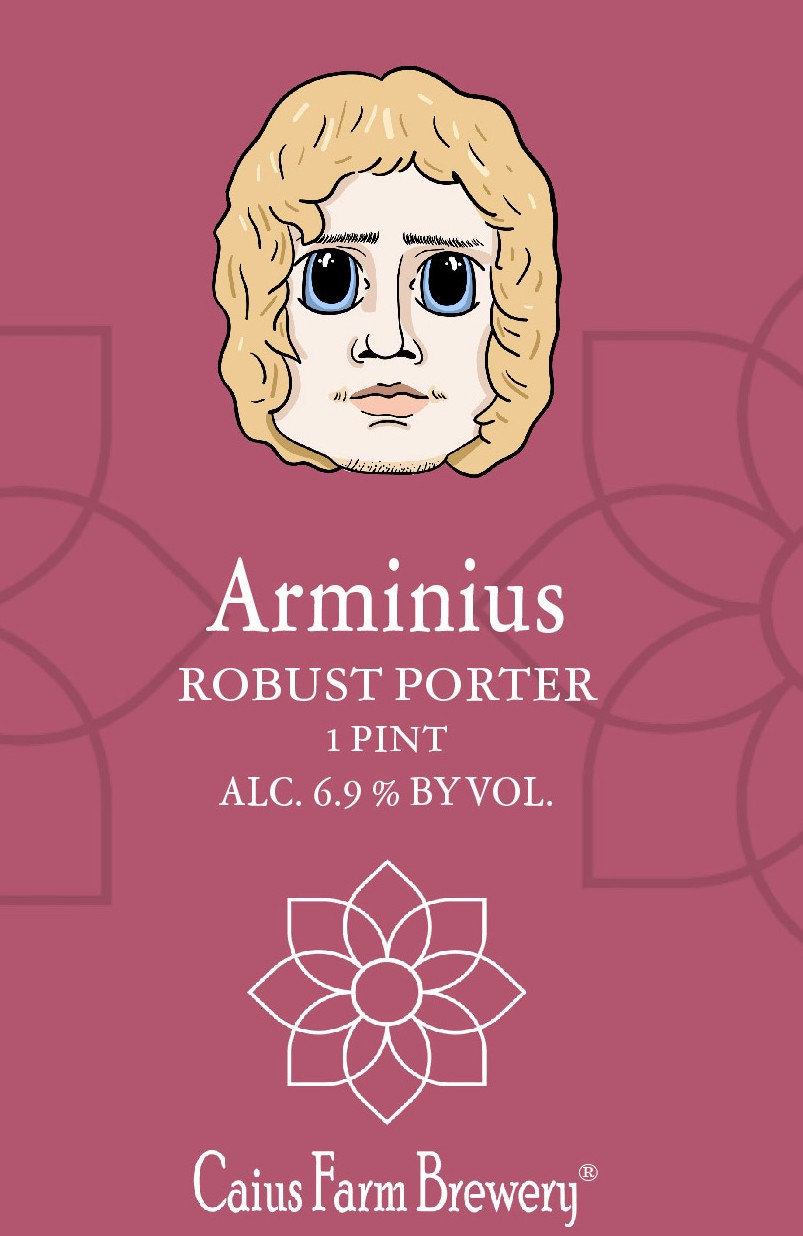
Arminius is our robust porter. Crafted with British malted barley, a complex assortment of British and German specialty malts, classic American hops, and our ale yeast, it is bold, clean, and complex. We taste notes of dark chocolate fudge, chocolate covered espresso beans, caramel, and cacao powder. It is named after Arminius (18 BCE – 17 CE), who was a Germanic chieftain of the Cherusci tribe, and he is known for commanding the Germanic forces during the Massacre of Teutoburg Forest in 9 CE. This event was considered one of Rome’s greatest defeats, with three legions having been destroyed, and was the reason why Augustus exclaimed: “Quintilius Varus, give me back my legions!”

Balbilla is our German Kölsch-style Ale. Crafted with German malted barley and wheat, a blend of classic and new German hops, and our favorite kölsch yeast, it is crisp, dry, and refreshing. Lagered for many weeks and naturally carbonated, we taste notes of candied lemon, blackberry, freshly baked bread, and crackers. It is named after Julia Balbilla (72 – after 130 CE), who was a Greco-Roman noblewoman and famous poet. She accompanied the emperor Hadrian on his tour of Egypt and several of her epigrams, which survive today, were inscribed on the Colossi of Memnon.

Brutus is our flagship India Pale Ale. Crafted with American malted barley, specialty German malts, a touch of flaked oats, and our house ale yeast, it is refreshing, juicy, and soft. Hopped generously with Citra®, Simcoe®, and Mosaic®, we taste notes of orange sorbet, bubblegum, apricot, overripe mango, and candied lemon. It is named after Lucius Junius Brutus (6th century BCE), who was a famous founder of the Roman Republic after the expulsion of the last Roman king, Tarquinius Superbus.

Sappho is our flagship German-style Helles lager inspired by our travels in Germany. Crafted with German malted barley, a blend of classic and new German hops, and our house lager yeast blend, this lager is soft, balanced, and complex. Single-decocted, naturally carbonated, and lagered for over eight weeks, we taste notes of bread, crackers, candied lemon, and melon. It is named after Sappho (~615 - 570 BCE), who was one of the most renowned ancient poets due to her beautiful yet concise writing style. She is primarily known for her poems on sexuality, love, and marriage. She was even regarded as the tenth muse!

Collaboration with Pivotal Brewing.
Hopped with a blend of Nectaron, Nelson Sauvin, Nelson Cryo, and @freestylehops cold pressed hop juice Wai-iti, this DIPA is soft, tropical, and extremely drinkable. We taste notes of cotton candy grapes, guava sorbet, and peach nectar. We also utilized a unique bioengineered yeast strain called London Tropics from @berkeley_yeast and a thiol booster from @omegayeast, both of which add a tropical fruit cup profile to the beer.
Available Bottles:
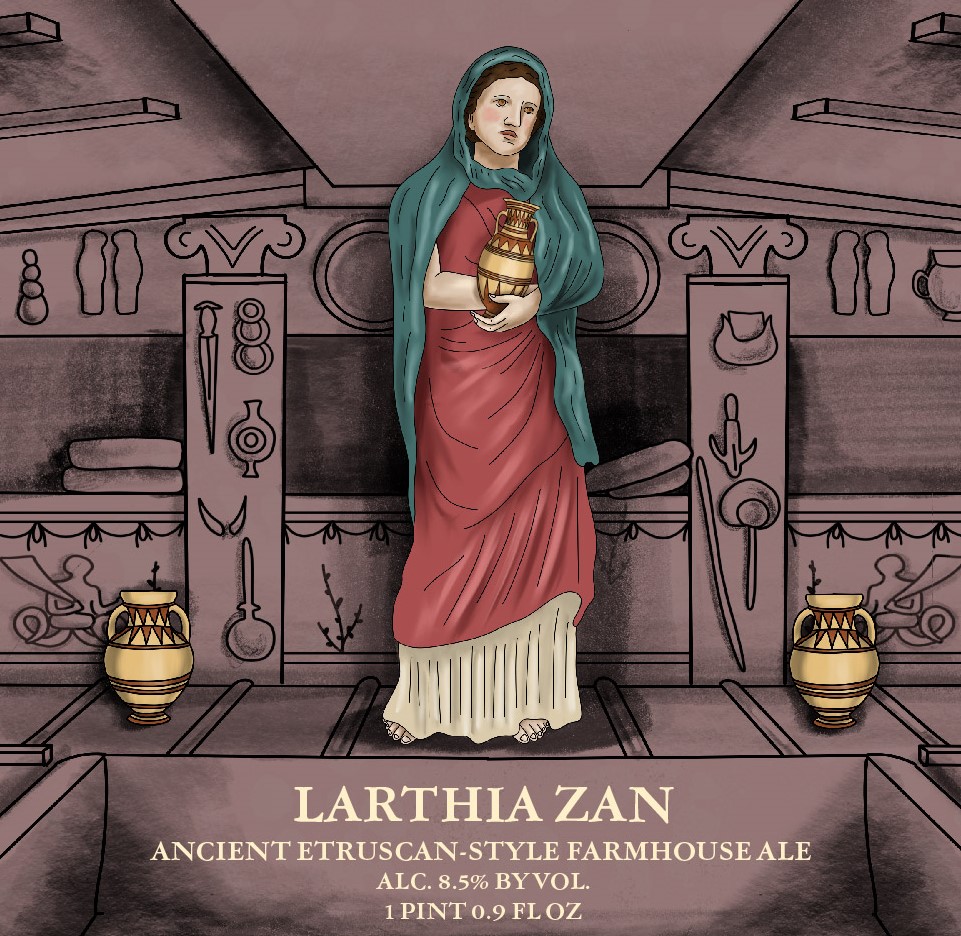
Between the 9th and 2nd centuries BCE, ancient Etruscans, who lived in the region of modern-day Tuscany in Italy, brewed and drank beer. This ancient brew was crafted with local grain, mainly rye and spelt, and flavored with various other ingredients such as honey, dates, pomegranates, and figs. This ale was most likely fermented with leftover wine or even with the microbes present in the unpasteurized honey they used, and it would have been above 8% ABV. There is also evidence that they actually brewed with wild hops, almost 2000 years before hops became the standard in brewing! This ale was extremely popular among the ancient Etruscans, but after they were conquered by Rome, this ale was lost to history!
Inspired by this forgotten ancient ale, we sought to craft an ale entirely with CT grown and made ingredients. We crafted our interpretation with a mash comprised of CT grown and malted spelt and rye from Thrall Family Malt, Teamaker hops from Smokedown farms, and a very large amount of raw unpasteurized honey from Stonewall Apiary. We performed a single decoction mash and lightly hopped this ale throughout the boil with the Teamaker hops. In the foeder, we added the raw unpasteurized honey and transferred the cooled wort on top. After several weeks of rest, a 100% natural fermentation began and we let this ale condition and mature over the course of 28 months in oak. In fact, this is the third ever beer we brewed here, several weeks before we opened to the public in 2023. After conditioning in oak, we bottled this ale and naturally carbonated it within the bottle over the course of 8 months. After those many months of conditioning, it is finally ready to enjoy! This beer is unlike any farmhouse we have ever brewed or tasted, and it begs to be enjoyed with family on a cool winter night.
It is named after Larthia Zan, who was an ancient Etruscan woman who died sometime in the 5th century BCE. Nothing is known about her life or who she was. We only have a small inscription of her funerary monument which mentions her name.

Marcus is our flagship Farmhouse Ale. We crafted it with American malted barley, malted white wheat, a touch of flaked oats, specialty German malts, European noble hops, and our house mixed culture. Following a complex step mash schedule, we fermented and conditioned this ale in one of our American white oak foeders. After 16 months of conditioning in oak, it was bottled and naturally carbonated within the bottle over the course of eight months. The beer that emerged is tart, delicate, and incredibly complex. We taste notes of apricot, peach, white grapes, guava, and blackberry. It is named after Marcus Aurelius (121 – 180 CE), who was the last of the “Five Good Emperors” during the Roman Empire. He is known for his Stoic philosophical text “Meditations”, which still influences and inspires people to this day.

Meditations is our series of beers which evoke significant spiritual reflection and emotional response. For this inaugural batch, we blended two stout recipes aged in barrels: (1) a stout recipe known as BS1 aged in a 15-year 1792 barrel for 22 months and then aged in a Willett Bourbon barrel for another 10 months and (2) a stout recipe known as BS2 aged in a Buffalo Trace Mash #1 barrel for 12 months and then aged in a Willett Bourbon barrel for another 10 months. After blending, we conditioned this stout on a blend of four vanillas: Hawaiian, Sumatran, Indian, and Comorian. This stout is named after a specific passage from Marcus Aurelius' Meditations. In this case, passage 4.17: "Do not live as though destined to live countless years; while you live, while it is possible, become good." -Marcus Aurelius translated by Caius Mergy

.svg)
